By Paul Perry, featuring Manfred
Manfred came to Buenos Aires for a month or two. That was three years ago. The Wisconsin native—a tech salesman who plays basketball like it’s a contact sport and treats rejection like a performance metric—sat down with me to break down what actually happens when a single professional tries to build a life here. We covered the pickup courts that became his social lifeline, the nightlife that earns a solid 7/10, and why the “passport bro” fantasy dies on arrival. If you’re considering the move and want to know whether you’ll find your people—or just a lot of white people and some very physical basketball—this one’s for you.
Watch the full conversation here: Manfred on the Gringos in Buenos Aires Podcast.
Should a Single Professional Move to Buenos Aires in 2026?
Buenos Aires rewards people who bring something to the table. Manfred’s three-year arc proves it: he arrived knowing no one, found his community through basketball, and built a social life that doesn’t depend on expat bubbles or tourist circuits. The city is affordable when you earn in dollars, architecturally stunning, and socially demanding in ways that filter out the low-effort crowd. If you can handle rejection—on the court, in the club, at migraciones—and you’re willing to integrate rather than import your expectations, Buenos Aires delivers. If you’re looking for a place where your foreignness alone opens doors, Manfred’s experience suggests you’ll be disappointed.
Arrival Shock: “Too Many White People”
Most Americans landing in South America expect a demographic shift. Manfred got the opposite. “Too many white people,” he told me. “A lot of white people here.” Coming from Wisconsin—hardly a diversity utopia—this wasn’t the exoticism he’d anticipated. He researched the history and found the answer in Argentina’s immigration waves: Italians, Spaniards, Germans, and other Europeans who shaped the country’s gene pool and its architecture. Buenos Aires earned the “Paris of South America” label honestly, and for a Black American stepping off the plane, the visual impact is immediate and disorienting.
This isn’t Brazil or Colombia. Argentina’s Afro-descendant population has been historically undercounted and marginalized, with most estimates placing the country at roughly 95% European-descended. International figures like Samuel L. Jackson have publicly criticized Argentina over racism, particularly after incidents during the 2022 World Cup. Manfred’s experience, however, complicates that narrative. “I don’t work for like an Argentine company,” he noted. “Maybe I’m an outlier.” His remote sales job insulates him from the workplace discrimination that might color another expat’s reality. He’s not claiming Argentina is a post-racial paradise—he’s saying his specific circumstances haven’t produced the horror stories the internet promised him.
Basketball as Social Infrastructure
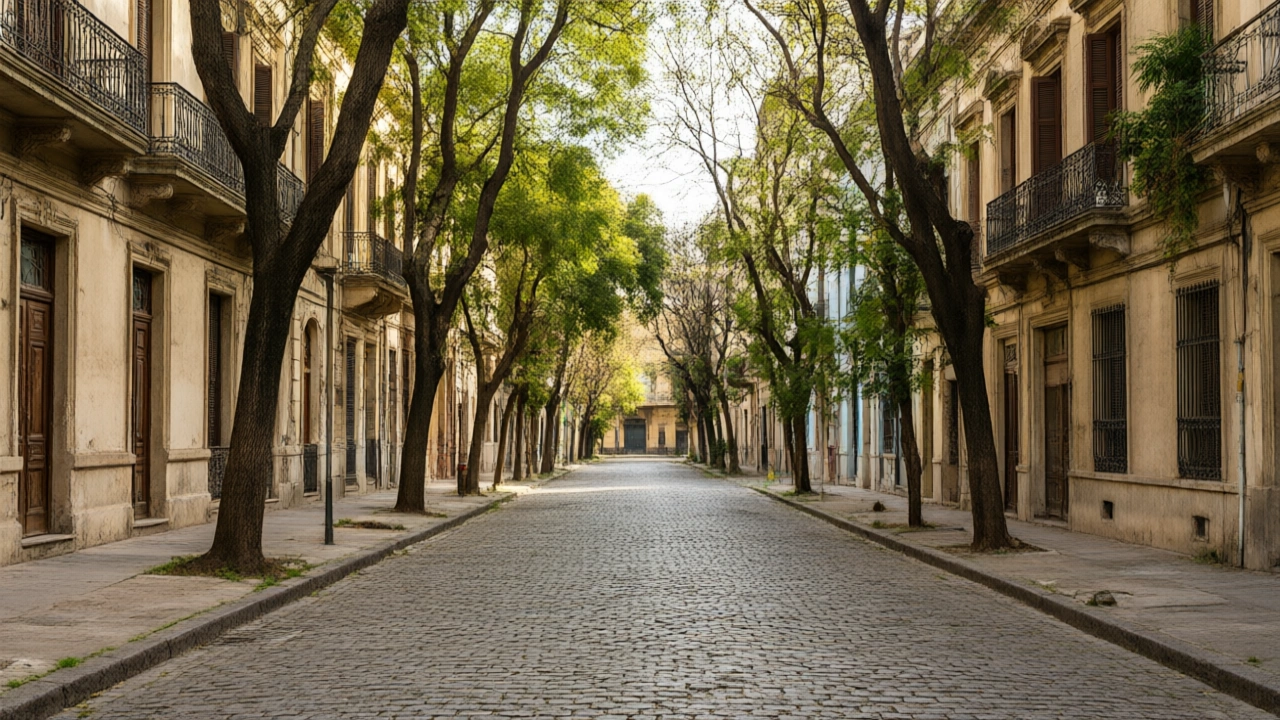
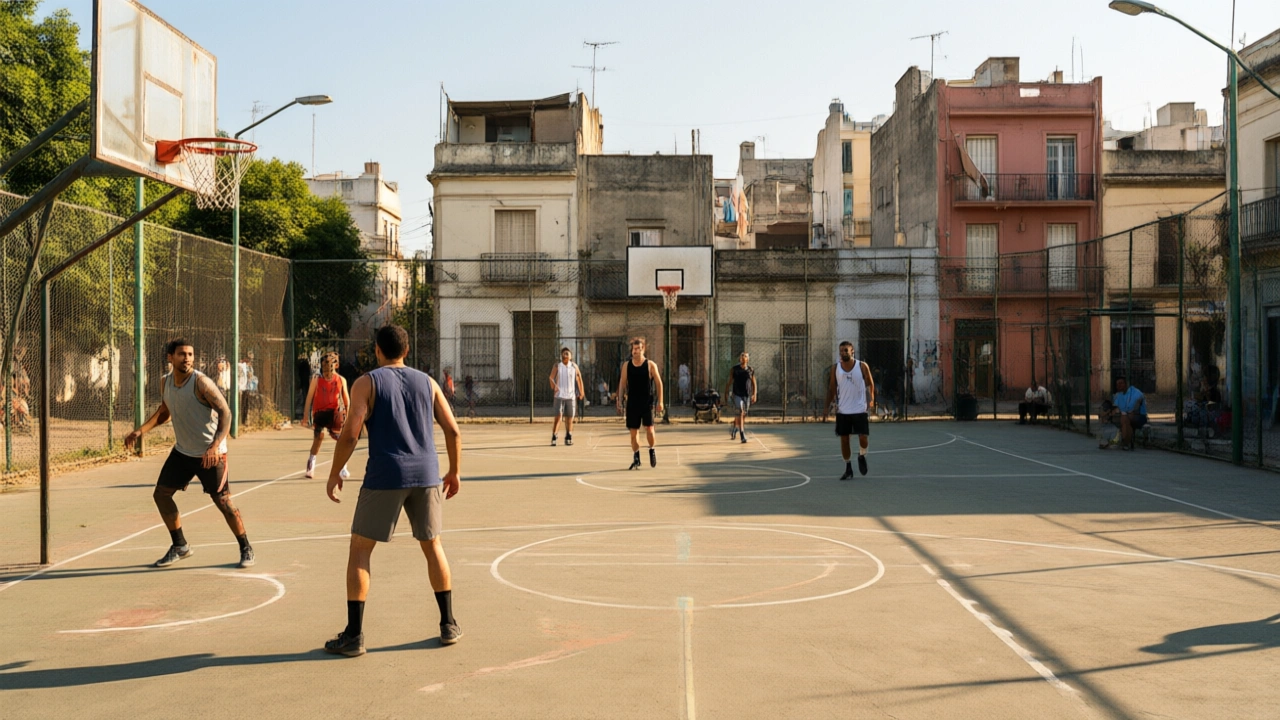
Manfred didn’t find his crew at language exchanges or expat meetups. He found them on the court. Sunday “king of the court” games at the Pacific court became his entry point—Colombian friends, opponents who “get so mad” they’d insult his mother in Spanish he hadn’t learned yet, and a growing reputation: “Oh yeah, that’s the gringo.” Eventually, the recognition turned into invitations to join club teams.
Argentina has real basketball pedigree—Olympic gold in 2004, Manu Ginóbili, Luis Scola, a domestic league system that runs deep into neighborhood clubs. Manfred ended up playing for a club he called Valentina Cena, which he described as “probably one of the top leagues here” in South America. The style surprised him: “The one misconception about basketball here is like they can’t play. I would say here is more physical… it’s like a mental warfare.” This isn’t the finesse-first European game some expect. It’s grinding, psychological, and exactly the kind of environment where a competitive American can earn respect.
This echoes an older generation of expat basketball lore here. Back in the 1990s, I knew guys like Patrick—Nigerian, “six foot something”—and Carlos from Boston, playing across courts from Klees to Devoto. Joe Manley was recruiting former NBA players for Boca Juniors and River Plate. Stanley, 6’8”, played for River Plate before heading to Japan, but not before discovering that “the beds were too small and he had trouble taking the subway.” The infrastructure for gringo basketball integration has been here for decades; Manfred just found his lane in it.
Nightlife: 7/10, and Here’s Why
Manfred rates Buenos Aires nightlife a 7 out of 10, and the reasoning matters more than the number. “Not really much of a dance culture here,” he explained. “A lot of these individuals like to just talk throughout the night, which I talk all week, so I don’t really feel like talking… I feel like dancing.” For a single guy who spends his workdays in sales conversations, the club scene’s emphasis on standing around and chatting misses the mark. He wants movement, not more talk.
This is a generational shift. When I was running around Buenos Aires nightlife in the 1990s, the treatment was different. “We always got into the clubs for free. We were always in the VIP,” I told Manfred. The foreignness itself was a currency. I mentioned Leaf France and a guy named Arro—5’4″, knee pads, would “bust out in the middle of the dance floor… jump and drop and spin.” That era’s expat nightlife had a performative, almost circus-like quality. Manfred’s 2020s experience is more level: no red carpet, no automatic VIP, just a solid but not transcendent scene.
Venues he mentioned include Uptown in Palermo, plus spots called Laala and Presidente. Palermo remains the primary nightlife district for younger expats and porteños, with a concentration of bars and clubs that keeps the neighborhood humming on weekends. As of his experience, these were the go-to spots—but Buenos Aires nightlife venues shift fast, so check current listings before you head out.
The Passport Bro Myth, Busted
If you’ve spent any time in online expat spaces, you’ve encountered the “passport bro” narrative: the idea that simply being a foreign man in certain countries unlocks romantic attention. Manfred’s verdict is blunt: “No, like here you actually have to have game to talk to women… You have to bring something.”
His club technique reflects his sales background. “No matter how fine she is, she can be Messi’s wife. I’m talking to her. I don’t care.” Minimal conversation, phone out, get the area code, “Here.” In loud venues, efficiency beats charm. And the rejection? He reframes it as fuel: “I work in sales… I get rejected every day, every hour, every minute… You don’t know her. You don’t know her name. Like, what are you afraid of?” His hottest take: “Actually, the best part when someone rejects me, actually I get that’s better than me conquering it.”
This isn’t the fantasy some guys are shopping for. Buenos Aires demands social competence. Manfred recounted an encounter with a Coloradan who spotted his hat and complained that women ignored him despite being “a gringo, I’m white.” Manfred’s response: “Bro, you got to bring something more to the table… It’s hard for me here, too. Trust me. But I don’t let it affect me.” The passport alone isn’t a personality.
For a deeper dive into the realities of dating and social life as a digital nomad here, read our full guide: Buenos Aires Digital Nomad Life 2026: Real Talk on Money, Dating, and Basketball.
The Weirdo Magnet Phenomenon
Both Manfred and I self-identify as “weirdo magnets.” We attract the outliers. I once hosted an Irish guest from an island “20 miles off the coast of Ireland… 400 people.” Manfred has his own collection. His theory: “It’s the energy, man.”
This isn’t just a quirky personality trait—it’s a genuine expat hazard. Certain foreigners arrive in Buenos Aires and immediately gravitate toward dysfunctional social circles, feeding off each other’s complaints and isolation. The antidote, based on Manfred’s trajectory, is integration through activity. Basketball gave him a filter: people who show up, compete, and invite you back are self-selecting for functionality. The Coloradan at the bar complaining about women? That’s the other path.
Sales Mindset, Expat Life
Manfred’s sales career isn’t incidental to his Buenos Aires success—it’s the engine. Rejection tolerance, cold approach confidence, the ability to read a room and adjust: these are the same skills that determine whether you thrive or retreat into an expat bubble. “You only have one life,” he said, and it wasn’t a platitude. It was a closing argument.
His travel philosophy extends this. He prefers the “worst areas” in Brazil “just to kind of get the experience.” When I first came down in 1992, I picked Arraial d’Ajuda from a Thomas Cook guidebook—”a little short paragraph”—and took a 76-hour bus ride from Buenos Aires to get there. Stayed a year. There’s a throughline here: the people who last in Argentina are the ones who don’t need comfort to feel engaged.
Money, Visas, and the Perishable Reality
Argentina’s economic volatility means any specific number I write today could be wrong next week. As of August 2026, the blue dollar—the informal exchange rate that actually matters for expats bringing USD—remains volatile. Check dolarhoy.com or Ámbito Financiero before you exchange. The gap between official and parallel rates (the “brecha”) continues to define daily financial life here.
Rental prices are increasingly quoted in USD for temporary contracts, a shift that accelerated under the Milei administration’s reforms. For current ranges, check ZonaProp. The broader pattern: if you earn in hard currency, Buenos Aires remains significantly cheaper than most US or European cities. If you earn in pesos, the math is brutal and getting worse.
Visa rules: tourist entries typically allow 90-day stays, with extensions possible through Migraciones or by crossing to Colonia, Uruguay and returning. Policies have shifted under the current administration—always verify at migraciones.gob.ar before you plan. For a detailed walkthrough of the digital nomad visa option, see our Argentina Digital Nomad Visa: Your 2026 Guide.
Perishable fact callout: Exchange rates, rental prices, and visa rules referenced here are current as of August 2026. Verify all three before acting—Argentina doesn’t wait for blog posts to update.
What You Should Actually Do Next
- Come for 90 days first. Manfred planned a month or two and stayed three years. Don’t commit to a year-long lease from abroad. Use the tourist visa window to test whether your social integration strategy actually works.
- Bring an activity, not just a job. Basketball worked for Manfred. Could be football, tango, a running club, a language exchange that actually meets in person. The activity is the filter.
- Budget in USD, spend in pesos where possible. The blue dollar advantage is real but requires active management. Track the rate, use Western Union or cuevas (informal exchange houses), and avoid the official rate at all costs.
- Expect to bring something to the table socially. If your plan is “I’m foreign, therefore interesting,” recalibrate. Buenos Aires is a city of 3 million people with a deep cultural identity. Your passport is not a personality.
FAQ
Is Buenos Aires racist? What should Black expats expect?
Argentina has faced international criticism over racism, and its population is roughly 95% European-descended—a demographic reality that can be jarring. However, individual experiences vary dramatically. Manfred, a Black American working remotely for a US company, reported no major incidents in three years. He acknowledges his situation may be an outlier: he’s not navigating Argentine workplace dynamics or institutional systems where discrimination might surface. Come with awareness, not assumptions—and recognize that one person’s experience doesn’t map onto everyone’s.
Can I really integrate through sports?
Yes, and basketball has a specific advantage: it’s not football (soccer). Argentina’s football culture is intense, tribal, and hard to crack as an outsider. Basketball offers a smaller, more accessible community with a genuine domestic league structure. Manfred went from pickup games to club team invitations. The key is showing up consistently and competing—Argentine basketball culture respects physicality and effort, not reputation.
Is the “passport bro” thing real in Buenos Aires?
According to Manfred’s three years of direct experience: no. Being foreign doesn’t grant automatic romantic or social advantage. “You actually have to have game to talk to women… You have to bring something.” The men who struggle here are often the ones who expected their nationality to do the work. Buenos Aires rewards social competence, not passport status.
What’s the nightlife actually like for a single guy?
Manfred rates it 7/10. Palermo is the hub, with venues clustered within walking distance. The scene is more conversational than dance-focused, which suits some and frustrates others. Don’t expect the VIP treatment some expats remember from earlier decades—the foreigner mystique has diminished. Venues change frequently; check current listings before committing to a neighborhood for nightlife access.
How much money do I need to live in Buenos Aires in 2026?
If you earn in USD, Buenos Aires remains affordable compared to US or European cities, but specific numbers age poorly. As of August 2026, the blue dollar rate determines your real purchasing power—check dolarhoy.com for the current figure. Rentals are increasingly quoted in USD for temporary contracts. Budget for volatility: the peso value of your dollars can shift meaningfully month to month. For the latest economic context, see our June 2026 economic update.
Disclaimer: This article reflects firsthand experiences and is not immigration, legal, or financial advice. Visa rules change—confirm current policies at migraciones.gob.ar. Exchange rates and prices are volatile; verify before acting. Experiences of racism and social integration vary by individual; Manfred’s account represents his specific circumstances as a remote worker, not a universal truth.