By Paul Perry, featuring Diego Sardone
If you live in Buenos Aires or are considering it, you’ve probably noticed or heard about Argentines seeking opportunities abroad, particularly in the United States. This isn’t just a casual trend; it’s a complex decision driven by a desire for economic stability and different life paths. For expats here, understanding this phenomenon—often called “brain drain”—sheds light on the local economic and social landscape.
This isn’t about escaping a failing state; Argentina has actually made significant strides in economic stabilization, with growth rebounding in 2025 and expected to continue in 2026, driven by agriculture and energy exports [4]. Inflation has also sharply declined from 211.4% in 2023 to 31.5% in 2025 [4]. However, the economic roller coaster of the past still shapes long-term planning for many.
Key Takeaways
Many Argentines seek opportunities in the US primarily for greater economic stability and higher salaries, often with a plan to save money. While Argentina is not yet part of the U.S. Visa Waiver Program, pathways like marriage-based green cards and various employment visas (such as the EB-3 for skilled workers) are available. These processes involve significant costs (USCIS fees range from a few hundred to over $2,900 as of 2026, plus attorney fees from $1,000 to $15,000) and can take anywhere from 10 to 24 months, or even shorter for some immediate relatives. The local quality of life in Buenos Aires offers rich culture at a lower cost, but long-term financial planning remains a challenge for many.
The Pull of Stability: Why Argentines Look North
Argentines often pursue opportunities in the US with very specific goals. As Diego Sardone, an American immigration lawyer based here in Buenos Aires, shared on the Gringos in Buenos Aires Podcast, many aspire to work for five years in the States to save enough money to build a house back home [46]. This “foot in Argentina” mentality is common, even for those who move abroad. It highlights a core motivation: a desire for greater economic stability that Argentina, despite recent improvements, sometimes lacks.
While inflation has cooled to 11.4% in the first four months of 2026 (above budget, but a far cry from previous years) [4], and the country’s risk rating hit an eight-year low of 421 basis points as of July 2, 2026 [14], long-term financial predictability remains a significant concern. Paul Perry, the podcast host, echoed this frustration, noting the constant need to “speculate” and chase small discounts just to manage daily expenses [46]. It’s this underlying economic uncertainty that, for many, makes the promise of higher, more stable salaries in the US so appealing. Unemployment, at 7.8% in Q1 2026, also plays a role, albeit a slightly elevated one [19].
Navigating the US Visa Maze: Pathways for Argentines
For Argentines looking to move to the US, the immigration system is complex. Argentina is not currently part of the U.S. Visa Waiver Program (VWP), meaning citizens need a visa even for short tourist or business trips [6]. This involves applying for a B1/B2 visa, which, as Diego notes, can be straightforward for some but challenging for others [46].
Diego highlights a common hurdle: young Argentines (ages 18-35) often face higher tourist visa denial rates because it’s tougher for them to demonstrate sufficient arraigo (ties to Argentina) to convince interviewers they will return after their trip [46]. This underscores the need for thorough preparation and clear documentation of strong connections to Argentina.
Beyond tourism, the main pathways include:
- Tourist/Business Visas (B1/B2): Argentine citizens are required to apply for a B1/B2 visa for tourism or business, as Argentina is not part of the Visa Waiver Program [6].
- Marriage-Based Green Card: This pathway is available for Argentines marrying a U.S. citizen or green card holder, typically involving filing Form I-130, Petition for Alien Relative [7].
- Employment-Based Visas (Immigrant Visas): Approximately 140,000 employment-based immigrant visas are available annually in various preference categories (E1-E5) [42]. Most require an employer to obtain a labor certification and file Form I-140, Immigrant Petition for Alien Worker [43].
- EB-3 Visa: This specific employment-based visa is available for skilled workers (requiring 2+ years training/experience), professionals (bachelor’s degree), and “other workers” (less than 2 years training/experience) for permanent, full-time positions requiring employer sponsorship [25]. It can be applied for from Argentina via consular processing.
The Cost of American Dreams: Fees & Timelines
Pursuing a US visa or green card is a significant financial and time commitment. Here’s what to expect in terms of costs and processing times:
USCIS Immigration Fees (as of 2026):
| Form / Service | Fee (as of date) | Source |
|---|---|---|
| Premium Processing (I-129 / I-140) | $2,965 (March 1, 2026) | [5] |
| Premium Processing (I-539) | $2,075 (March 1, 2026) | [5] |
| Form I-130 (Petition for Alien Relative) | $675 (April 23, 2026) | [7] |
| Form I-485 (Adjustment of Status) | $1,440 (April 23, 2026) | [7] |
| Form I-765 (Work Authorization) | $0 – $260 (April 23, 2026, depends on concurrent filing) | [7] |
| Form I-131 (Advance Parole) | $630 (April 23, 2026, no fee if filed with I-485) | [7] |
| Proposed N-400 (Naturalization – paper) | $1,330 (June 23, 2026) | [12] |
| Proposed N-400 (Naturalization – online) | $1,280 (June 23, 2026) | [12] |
Note: General USCIS fees saw inflationary adjustments on January 1, 2026, with further increases for asylum and work authorization effective May 29, 2026 [10], [11]. Proposed increases for naturalization would also eliminate reduced fee options [12].
Marriage-Based Green Card Processing Timelines (as of mid-2026):
For immediate relatives of U.S. citizens, the entire process from filing to green card approval typically takes 10-24 months [26], [27]. Some cases, especially those filing Form I-130 and Form I-485 concurrently, can be processed in as little as 5-8 months [37]. Work authorization (Form I-765) and Advance Parole (Form I-131) often arrive sooner, within 3-8 months [26]. If you’re married for less than two years at the time of approval, you’ll receive a 2-year conditional green card, requiring a later application (Form I-751) to remove conditions [31].
Attorney Fees:
Given the complexity of US immigration law, many seek legal counsel. Attorney fees for US immigration cases can range from approximately $1,000 to $15,000, depending on the case’s complexity and the law firm [46]. Diego Sardone, being an American immigration lawyer, can practice US federal immigration law from Argentina, a unique advantage for many Argentines [46].
Life in Buenos Aires vs. The US: A Local’s Perspective
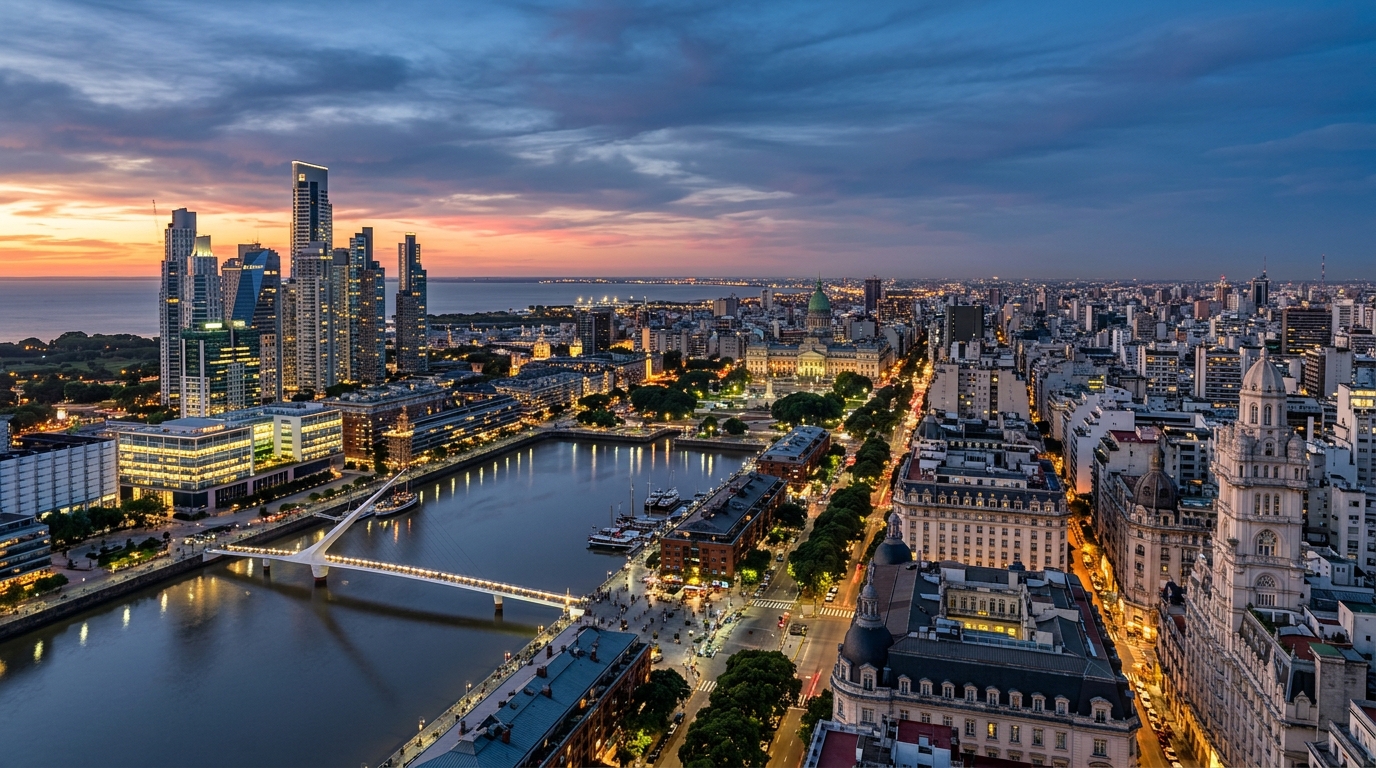
For us expats, the conversation about Argentines moving abroad often highlights what we appreciate—and sometimes lament—about life here. Argentina generally offers a high quality of life at a lower cost compared to many Western countries, especially for housing, food, and dining out [16], [35]. Buenos Aires, in particular, boasts a European-style city life, a vibrant food, wine, and café culture, and walkable neighborhoods [16]. As of May 2026, a comfortable lifestyle for a single person in Buenos Aires can cost between $1,200 and $1,700 USD equivalent per month, with a premium Palermo lifestyle topping $2,000+ [41].
However, the contrast in financial stability is stark. Diego humorously noted that in the US, “you don’t see too many lawyers… taking the subway” in a suit [46], highlighting the different financial realities. While the US might offer greater financial rewards and predictability, Diego also finds it easier to build deep, quick friendships in Argentina, where people maintain less social distance than in the US [46].
It’s not all sunshine and tango, though. Both Diego and Paul have experienced petty crime; Diego was pickpocketed in 2014, and Paul experienced a near-robbery on Florida Street [46]. While Paul emphasizes this was his only incident, these experiences do factor into the perceived downsides for some, adding to the general sense of “mañana” (tomorrow) pace and occasional bureaucratic hurdles. Argentina does permit dual citizenship, making it easier for those who wish to maintain ties [35].
Argentina’s Evolving Immigration Landscape
For foreign residents in Argentina, immigration policies have seen recent shifts. In May 2025, President Milei’s administration implemented Decree 366/25, which tightened immigration policies [33]. This decree shortened temporary residence from 180 to 90 days, limited access to permanent residency and citizenship, and eased deportations [22], [33]. Under this decree, non-urgent medical care and public university education require payment from non-citizens or non-permanent residents, and foreigners must have health insurance and prove financial means upon entry [15], [21].
However, the situation is dynamic. As of July 2, 2026, a judiciary ruling overturned key aspects of Milei’s migration decree [12]. Specifically, requirements for migrants to acquire citizenship and vote were deemed unconstitutional and needing Congressional decision [12], [12]. This means ongoing uncertainty and potential shifts in Argentina’s immigration policy, something for any expat to keep an eye on by checking official sources like migraciones.gob.ar.
The Road Ahead: Argentina’s VWP Bid and Future Outlook
There’s positive news on the horizon for easier travel to the US. Argentina is actively moving closer to rejoining the Visa Waiver Program (VWP), which would allow visa-free travel for tourism or business (up to 90 days) [20], [39]. A statement of intent was signed in July 2025, and technical steps are underway, with visa-free travel potentially possible from 2027 [20], [32]. A key hurdle Argentina needs to overcome is reducing its visa rejection rate, which stood at 7.47% in 2025, above the threshold for VWP entry [17], [20].
On the economic front, while growth is projected at 3-4% for 2026 [4], political risk looms. Upcoming presidential elections in mid-2027 are expected to introduce market uncertainty and potential pressure on the exchange rate [19]. This continuous cycle of progress and potential uncertainty continues to be a driving force behind many Argentines’ decisions to look for opportunities abroad.
Watch the full conversation with Diego Sardone on the Gringos in Buenos Aires Podcast here.
Perishable Fact Callout:
- Economic figures (inflation, country risk, wholesale dollar rate, unemployment), USCIS fees, US visa processing times, and Argentine immigration policies cited in this article are accurate as of July 2, 2026.
- The wholesale dollar rate was 1,489 pesos as of July 2, 2026 [14]. Always check a live tracker like dolarhoy.com for current exchange rates.
- U.S. Citizenship and Immigration Services (USCIS) fees are subject to change. Always verify current fees and procedures on official websites like USCIS.gov.
- Argentine immigration policy is subject to ongoing legislative and judicial review. Confirm the latest regulations with official Argentine government sources (e.g., migraciones.gob.ar).
FAQ
Can Argentines travel to the US without a visa right now?
No, as of July 2, 2026, Argentine citizens still require a U.S. visa (typically a B1/B2) for tourism or business. They cannot use ESTA for visa-free entry [6]. However, Argentina is actively moving closer to rejoining the Visa Waiver Program, with visa-free travel potentially possible from 2027 if technical steps are completed and their visa rejection rate (7.47% in 2025) is reduced [17], [20].
How does Argentina’s current economic stability impact Argentines’ decisions to move to the US?
While Argentina has seen significant economic stabilization with inflation sharply declining to 31.5% in 2025 and projected GDP growth of 3-4% for 2026, historical volatility and ongoing political risk (especially leading up to the 2027 elections) still drive many Argentines to seek greater long-term financial predictability and higher salaries in the US [4], [19]. Even with recent improvements, the desire for an economy where long-term planning is less speculative remains strong [46].
What is the biggest challenge for young Argentines (18-35) applying for a US tourist visa?
The primary challenge for young Argentines (18-35) is demonstrating sufficient “arraigo,” or strong ties to Argentina, to convince US visa interviewers that they intend to return after their visit [46]. This can lead to higher denial rates compared to older applicants who might have more established careers, families, or property in Argentina. Applicants need to provide clear evidence of their intent to return, such as employment letters, property ownership, or family commitments.
This article provides general information and perspectives as of July 2, 2026. It is not intended as legal, immigration, or financial advice. Always confirm all visa rules, immigration procedures, fees, and economic data with official sources such as USCIS.gov, travel.state.gov, the U.S. Embassy in Argentina, and migraciones.gob.ar. Prices, rates, and policies can change rapidly, and verification before acting is essential.