By Paul Perry
Walk through any record store, tune into an Argentine radio station, or chat with a local musician, and you’ll quickly realize Luis Alberto Spinetta isn’t just music history here – he’s still a living legend. For newcomers in Buenos Aires, understanding “El Flaco” (The Thin One) isn’t just about listening to music; it’s about tapping into the very soul of Argentine culture and the rich tapestry of Rock Nacional.

Luis Alberto Spinetta, Argentine rock legend “El Flaco,” playing guitar on stage.
Engaging with Spinetta’s Legacy in Buenos Aires
Luis Alberto Spinetta (1950–2012) is revered as a founder of Rock Nacional, celebrated for his poetic lyrics and innovative blend of rock, tango, jazz, and bossa nova. Expats can dive into his legacy by:
-
Streaming his extensive discography (Almendra, Pescado Rabioso, Invisible, solo work).
-
Visiting local record stores for vinyl and merchandise.
-
Seeking out tribute nights or live shows in Buenos Aires’s vibrant underground music scene.
-
Observing National Musician’s Day on January 23rd, his birthday, often marked by special events.
Who Was “El Flaco” Spinetta?
Luis Alberto Spinetta, born January 23, 1950, and passing on February 8, 2012, at 62, isn’t just a musician; he’s a cultural titan. Affectionately known as “El Flaco,” he is widely considered one of the most influential and revered rock artists in Argentina, a true pioneer of Rock Nacional – Argentina’s homegrown rock movement. For over four decades, Spinetta revolutionized music with his intricate instrumental arrangements, deeply poetic and often surreal lyrics, and a unique fusion of rock with elements of pop, tango, jazz, and bossa nova. His work, celebrated for its idiosyncratic use of grammar, helped elevate local rock to a serious art form. He fronted iconic bands like Almendra, Pescado Rabioso, Invisible, and Spinetta Jade, releasing roughly 40 albums across his solo and group careers as of June 2024.
Why Spinetta Matters to Argentina (and to You)
Spinetta’s impact is so profound that Argentina officially declared January 23rd, his birthday, as “Día Nacional del Músico” (National Musician’s Day) in 2014, shifting it from November to honor him. This is a country-wide celebration of music, directly linked to his immense cultural significance.
His music isn’t just nostalgia; it continues to inspire new generations. As of January 2026, Buenos Aires celebrated what would have been his 75th birthday and National Musician’s Day with free tribute concerts like “Spinetta Infinito” at the Centro Cultural Recoleta and “Spinetta: El Marcapiel” at Patio del Konex. Leo Sujatovich, a former keyboardist for Spinetta Jade, offered an emotional tribute in January 2026, reflecting on Spinetta’s intimate personality and his music’s ongoing relevance to younger artists. Even in February 2026, the Buenos Aires Herald republished an archived interview, underscoring his enduring status as a “living myth.”
To understand the reverence for Spinetta is to understand a layer of Argentine identity. It’s the kind of respect that means if El Flaco offered you a mate – that traditional Argentine herbal drink – you’d accept it, even if you’d never tried it before and might not enjoy it. One friend of mine, Mauro, found himself in that exact situation, sharing “mate con El Flaco” – an unmissable cultural moment, regardless of personal taste.
Finding Spinetta’s Echoes in Buenos Aires
As an expat or long-stay visitor, engaging with Spinetta’s legacy is surprisingly easy in Buenos Aires:
-
Streaming & Discovery: His entire catalog is readily available on major streaming platforms. Start with albums like Almendra’s self-titled debut, Pescado Rabioso’s Artaud, or his solo masterpiece Kamikaze.
-
Local Record Stores: Buenos Aires has a thriving culture of independent record stores, particularly in barrios like Palermo, San Telmo, and Villa Crespo. These are treasure troves for vinyl, CDs, and often Spinetta-related merchandise. Chat with the owners – they’re usually passionate about Rock Nacional and can guide your exploration.
-
Tribute Nights & Live Music: Keep an eye on local music listings (check online event guides or social media for venues). Many smaller venues and cultural centers host tribute nights for Spinetta and other Rock Nacional legends. These can be incredible opportunities to experience the music live and connect with local fans.
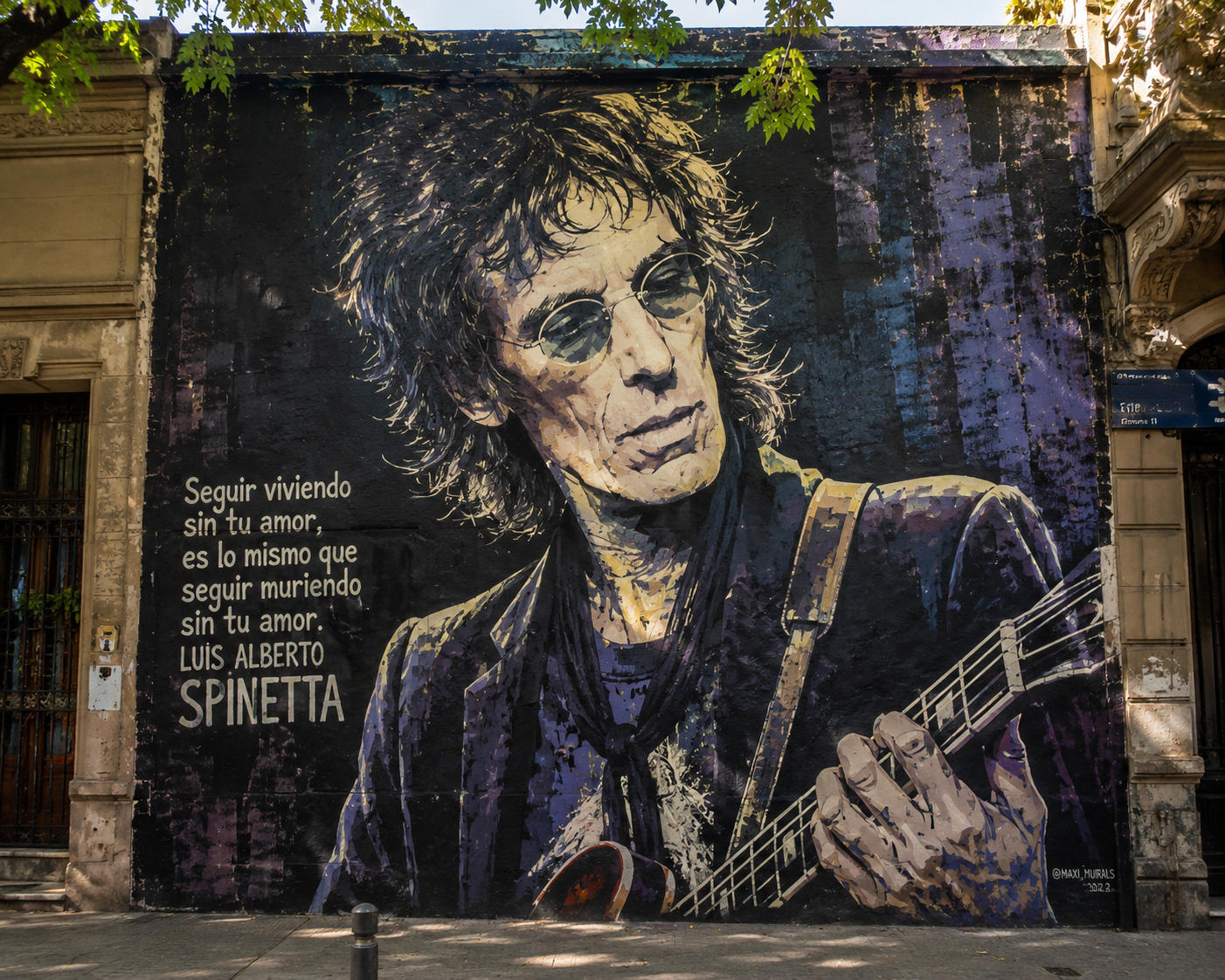
Street art mural of Argentine musician Luis Alberto Spinetta in Buenos Aires.
The “Everyday” Legend: My Encounters with Spinetta
What’s striking about Buenos Aires is how its cultural icons, even those as revered as Spinetta, can feel remarkably accessible. I was lucky enough to know El Flaco personally. He wasn’t the kind to ring a doorbell – instead, he’d often show up at my home on Colodrero street, making noise against the metal gate or shouting my name.
He’d visit for my birthday, making it truly “especial,” as my parties “nunca resultaron ser gran cosa.” We’d retreat to my shed, which he affectionately called “very trippy” due to all the things hanging on the walls. While he wasn’t a heavy drinker, we’d share whiskey with Coca-Cola, often accompanied by his “vicios más aromáticos” (more aromatic vices, if you catch my drift). He was always “muy copado” (very cool and friendly) with my friends.
Spinetta had a keen eye for art. Once, he commented on a collage I’d made of 100 historical figures. “Qué loco este y si es very trippy y lo hiciste vos,” he remarked, also observing the gender imbalance – a testament to his sharp, artistic mind. Another memorable visit was when he and his girlfriend met my parents, who were visiting from the US. My mother, who was a teenager when Spinetta first started, “no lo podía creer” (couldn’t believe it). He “respondió muy amablemente” to them, demonstrating his gentle nature.
Despite his fame, family, and somewhat reclusive nature (“un poco ermitaño”), he didn’t stay long. Yet, the moments were precious. My mother managed to snap a photo with him using a disposable Kodak camera – it’s the “única foto que tengo del flaco y yo juntos,” a rare and cherished memento that speaks to the unique, personal connections that can form even with national heroes in this city.
Beyond Spinetta: Diving into Buenos Aires’s Local Music Scene
While Spinetta is a fantastic entry point, Buenos Aires offers a thriving underground music scene that goes far beyond famous tango clubs. This is where the enduring influence of legends like Spinetta truly comes alive, inspiring new bands spanning rock, jazz, electronic music, and more.
To find these scenes:
-
Follow Local Bands: Check out local music blogs and social media for bands that cite Spinetta as an influence.
-
Explore Barrios: Neighborhoods like San Telmo, Abasto, and Villa Crespo are known for their smaller, more intimate music venues.
-
Cultural Centers: Keep an eye on the programming at places like Centro Cultural Recoleta, Ciudad Cultural Konex, and Centro Cultural Kirchner (CCK). They often host free or low-cost concerts showcasing emerging talent and paying homage to Argentine greats.
Perishable Information Callout
Prices for concerts, records, or merchandise related to Spinetta or local music acts are subject to rapid change due to inflation and exchange rates in Argentina. Always check current prices at the point of purchase. For live exchange rates, consult a reliable source like dolarhoy.com before making financial decisions.
Practical Next Steps for Expats
-
Start Listening: Dive into Spinetta’s discography on your favorite streaming service. A great starting point is his Lo Mejor de Spinetta compilation, then explore the works of Almendra, Pescado Rabioso, and Invisible.
-
Hit the Record Stores: Take an afternoon to browse vinyl in Palermo or San Telmo. Ask for recommendations for Rock Nacional.
-
Look for Live Music: Search online event listings for “tributo Spinetta” or “Rock Nacional en vivo” to catch a local show.
-
Engage with Locals: Ask Argentine friends or acquaintances about their favorite Spinetta songs or memories – it’s a great way to connect culturally.
FAQ: Spinetta’s World
Are there specific places in Buenos Aires associated with Spinetta that I can visit?
While there isn’t a dedicated Spinetta museum, you can visit areas like Belgrano (where he lived) or the cultural centers that host his tributes. The Centro Cultural Recoleta and Ciudad Cultural Konex, for example, frequently host events celebrating his legacy, especially around National Musician’s Day (January 23rd). Many of the small, historic venues in San Telmo or Abasto would have hosted artists inspired by him.
How can I identify Rock Nacional in the wild if I’m new to Argentine music?
Beyond Spinetta, look for names like Charly García, Gustavo Cerati (and Soda Stereo), Pappo, Fito Páez, and Sumo. These artists, along with Spinetta, are cornerstones of Rock Nacional. Listen for music with distinct Spanish lyrics, often featuring poetic or philosophical themes, and a blend of rock genres with local influences like tango or folklore. Many younger bands draw heavily from this tradition.
Does Spinetta’s music influence current Argentine pop or electronic artists?
Absolutely. Spinetta’s experimental approach, complex harmonies, and poetic lyricism laid groundwork that continues to resonate across genres. Many contemporary Argentine artists, even those in pop, indie, or electronic scenes, cite him as a foundational influence, often reinterpreting his avant-garde spirit through modern sounds rather than directly mimicking his style. His push for artistic freedom is a lasting legacy.
Disclaimer: Exchange rates and prices for cultural events or merchandise in Buenos Aires can change rapidly; verify before acting. While this article provides insights into Argentine culture, the “Everyday Legend” section is anecdotal and reflects a unique personal friendship with a cultural icon, and not all experiences with public figures will be the same.